


The idea that we are each having significantly different experiences of the world around us due to differences in our brains, experiences, upbringings, cultures, and world-views can go a long way in our mission to create spaces which are truly diverse and inclusive. Neurodiversity is defined by The Hum as “the diversity within the range of all possible brain types, where none can be deemed ‘normal’ and each is simply distinct. I attended “From the Golden Rule to the Platinum Rule: The Importance of Neurodiversity in the Workplace”, conducido por Lana Jelenjev, cofundador de la Fundación Neurodiversidad y Academia de Educación Neurodiversa . En este artículo destaco algunos de los aprendizajes clave del taller y herramientas que podríamos aplicar aquí en el CoLab.
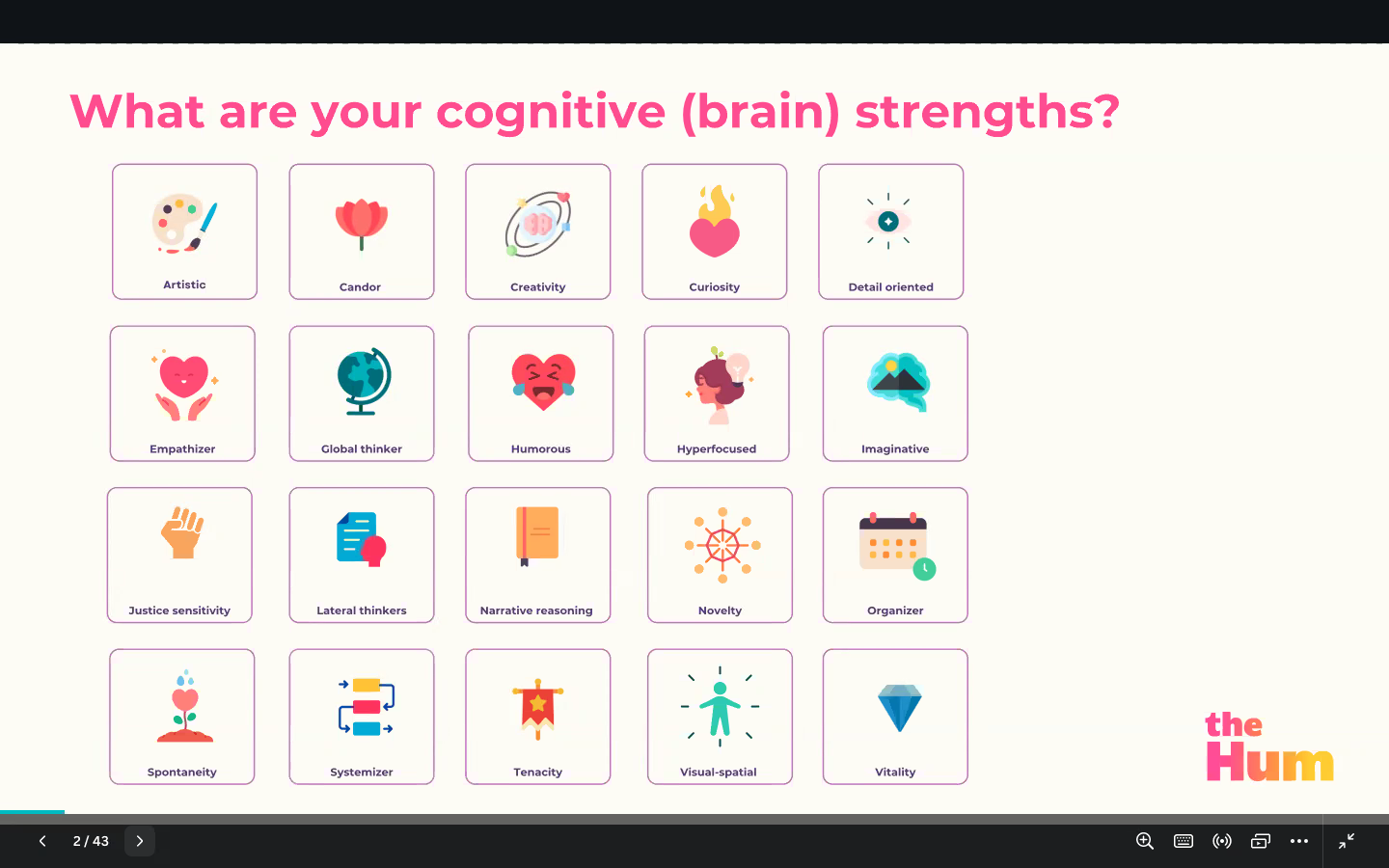
During the session Lana clearly outlined the scope of the issue, why we should build neurodiverse teams and laid out clear strategies teams could experiment with in creating more inclusive workspaces. We kicked off our session by sharing in breakout rooms what we felt our unique ‘brain strengths’ were – and used this to spur discussion on how using a strength-centred approach helps inclusion in diverse teams. By focusing on what we do well, rather than what’s ‘wrong with us’ or what accommodations we need – we create truly equal footing for all members of the team to find their unique role.
Luego nos sumergimos en el mensaje del libro infantil de la década de 1940 ‘La Escuela de Animales’ which narrates the experiences of a community of animals trying to meet the challenges of the new world through standardised education in which every animal must attend swimming, flying, running, and climbing school. The duck is an excellent swimmer but struggles through running and climbing; the rabbit excels at running but fails swimming, and the gophers feel so excluded from the school because digging isn’t on the curriculum that they boycott the whole idea. The moral of the story is: let the fish swim, let the rabbits run. Or put another way, if you judge a fish by its ability to climb a tree, it will live its whole life believing that it is stupid. This echoes the experiences of many neurodiverse people – excelling in certain skills which seem difficult to others but being judged by a set of skills less intuitive to them. It also underscores why The Neurodiversity Education Academy emphasises a strength-based approach to building inclusive workplace cultures.
Se estima que la comunidad neurodiversa representa hasta el 20% de la población general e incluye todas las formas de neurodiversidad, como las personas en el espectro autista, TDAH, dislexia, discalculia, así como formas de neurodivergencia que pueden adquirirse como resultado de una lesión o enfermedad. Esta parte de la población está marginada de muchas maneras, pero está especialmente excluida del lugar de trabajo y la educación, con solo el 22% de los adultos autistas en el Reino Unido empleados; y los niños con TDAH han escuchado hasta 20.000 comentarios negativos más en su vida hasta los 9 años. Diseñar para diferentes neurotipos a través del diseño universal; nos ayuda a todos, ya que muchos de los cambios pueden ayudar también a los individuos neurotípicos.
Es importante tener en cuenta que no existe un enfoque único para diseñar una cultura laboral inclusiva. Algunas de las herramientas y estrategias exploradas fueron: la construcción de nichos, el aprendizaje sobre los neurosistemas basados en intereses vs. importancia, la comprensión de las zonas de desarrollo, los brillos vs. los desencadenantes y el aprendizaje para comprender quién está en tu equipo. El liderazgo puede desempeñar un papel activo al escuchar de manera efectiva, aprender sobre la neurodiversidad, volverse más informado sobre el trauma y utilizar la retroalimentación basada en fortalezas para ayudar a los miembros del equipo neurodivergentes a despojarse de sus máscaras y comunicar sus necesidades de manera más efectiva.
En el núcleo del mensaje de Lana estaba el tema de pasar de la Regla de Oro: ‘Trata a los demás como quieres que te traten a ti’ a la Regla de Platino: ‘Trata a los demás como ellos quieren que los trates’. Este simple cambio de perspectiva funciona no solo para la neurodiversidad, sino también para incorporar diferencias culturales, de género o de antecedentes de todo tipo. Invita a los líderes de equipo a no asumir que ellos saben lo que es mejor para cada miembro del equipo, sino más bien de venir de un lugar de curiosidad and encourage team members to explore, experiment, and communicate what works best for them. I felt like this rule was one which could be adapted and applied as a modifier to the permaculture ethic of people care – too often we assume we already know the needs of those we want to design for, and we instead need to approach design from a ‘begginers’ mind’ and ask questions in order to discover the true needs of our communities and workplaces.
Reflexión sobre la Experiencia:
Encontré el taller muy interesante y lleno de valor, pero el contenido casi moved too quickly and I realised it was similar to my own presentation style. Watching Lana gave me some insight into how participants in my own workshops might feel overwhelmed. I also tend to present a lot of information wanting to really over-deliver on value, and forget that it might take the audience time to absorb and really engage new concepts. Far from being a criticism of Lana – who I found very interesting and informative as a speaker – it was a reminder that neurodiverse people hanging out together can often have insights into their own ways of thinking and communicating which are otherwise unclear to them.
Similarly the exercise of identifying our own brain-strengths gave my breakout room and I a great opportunity to identify commonalities and speak about the ways in which our strengths are not always perceived as such in the workplace. For instance we all identified with being candid – a great strength for teams as we were likely to give honest feedback, report on errors, mistakes or issues. However in a world designed around neurotypical forms of expression our candour had been misinterpreted as being overly harsh, out of line with cultural expectations or simply not politically savvy. How team leaders react and interpret diverse perspectives often shapes the way the team as a whole responds; and it offers an opportunity for the entire team to learn to be more open and honest with one another.
One attendee put it best – neurodiversity is biodiversity. By engaging in the process of understanding our own limitations in perception, including more voices and actively designing for universal access; we enrich and enliven our workplaces in ways we cannot predict.
Preguntas para reflexionar:
– How can you begin practising the platinum rule?
– What are your unique brain strengths? Have you asked your team about what they think their brain strengths are?
– How can you create a space which welcomes all neurotypes?
The Hum está organizando un curso en vivo llamado Wired Differently – Creating a Team Culture Where All Minds Can Thrive. Si está interesado en asistir y aprender más sobre cómo apoyar a los equipos neurodiversos, puede encontrar un código de descuento del 50% en #educación y formación en Slack para miembros de CoLab. También puedes encontrar más recursos gratuitos para la educación neurodiversa en Academia de Educación sobre Neurodiversidad


Siobhan Vida Ashmole es una permacultora neurodiversa y empresaria con sede en la zona rural de Sudáfrica. Su enfoque está en la creación de organizaciones resilientes capaces de hacer frente a los desafíos de la transición hacia un futuro regenerativo.
Vida ha trabajado en educación de emprendimiento ecosocial, agricultura regenerativa y comercialización y conservación de conocimientos indígenas.