Partner Relations


Our goals
To facilitate a thriving permaculture movement that is visible, credible, and impactful; where practitioners collaborate across borders and share knowledge and resources. To help create a world where permaculture transforms how communities collaborate to design solutions, grow food, restore land, and adapt to climate change, from grassroots to global scale.
Our work
-
A vibrant network of 151 members from 25+ countries
-
Next Steps project had 65 active contributors and created 100+ assets / resources licensed under creative Commons (CC BY SA). Examples include R&D, training, templates, frameworks and guides.
-
Raised a net of £510 000+ of funding to date
-
Distributed £21 000 in funding to small emergent projects and £12 000 for Diversity and Decolonization projects
-
6+ Microenterprises incubated
-
30+ Allied Partner Organisations
Value created
-
Emergent Festival: Community-led funding for grassroots
-
Funding Circle: Curates a database of permaculture-relevant funding opportunities, & delivers capacity building
-
Minimum Viable Academy: Training and capacity building
-
iCAAFS Open Badges: Decentralized accreditation framework
-
Digital Circle: Ethical digital infrastructure & prototyping

The CoLab addresses these systemic challenges by
-
Connecting a global network of practitioners through our online platform
-
Creating communities of practice that experiment and innovate together
-
Building capacity in fundraising, M&E, and digital literacy
-
Providing ethical digital infrastructure and tools
-
Researching, developing and disseminating new, evidence-based solutions
(from land management to business models to inclusive design) -
Creating templates, tools, training, and organizational support that enable scale
-
Aggregating and documenting the movement’s collective impact
-
Translating grassroots practice into evidence, policy, and resources
-
Advocating for permaculture as a solution to planetary crises
How the CoLab is unique
The CoLab is intentionally and collaboratively designed. We’re unincorporated, horizontal and self-organised, emergent, and globally distributed.
We’re an experimental model for permaculture organizing: Innovative, grounded in ethics and governed by those who participate.
Through sociocracy, transparent finances, and ethical digital tools, we prototype collaborative infrastructure others can adapt and replicate. We
build and test collaborative infrastructure like policies, community templates, trainings, open tools, fair wage guides; that others can easily replicate.
Qu'est-ce que la permaculture ?
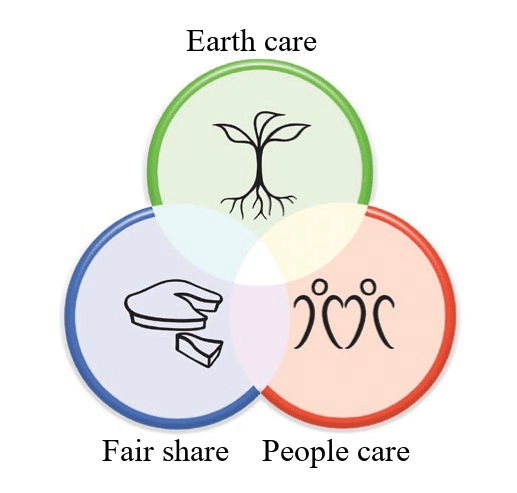
Permaculture is a practical design system rooted in three ethics: Earth Care, People Care, and Fair Share. It empowers communities to design their own solutions for food, water, shelter, governance, and collaboration; adapted and tailored to their unique context. Permaculture works with nature and with people, building self-reliant, cooperative communities that restore ecosystems while meeting human needs. From gardens to organizations, it creates regenerative systems at every scale, transforming both landscapes and how communities collaborate and make decisions together.
Permaculture as systems change
Permaculture tackles root causes of global crises through systems design:
-
Climate Change: Carbon sequestration, local economies, agroforestry, natural building, and closed-loop systems that regenerate rather than extract.
-
Biodiversity Loss: Local ecosystem health is designed in through organic agriculture & habitat restoration leading to increased resilience.
-
Food Security: Locally-controlled, regenerative food systems that build soil health and community self-reliance.
-
Community Empowerment & Justice: Participatory design and cooperative models that redistribute power and address inequality.
-
Intersectional Marginalization: Centres inclusion and creates space for marginalized communities to lead sustainable solutions.
-
Health & Nutrition: Diverse food systems produce nutrient-dense harvests with increases resilience and food security built-in.
-
Gender: Human-centered ethics reject oppression; cooperative models challenge patriarchal structures and empower women’s leadership.
-
Environment: Regenerative practices restore soil, water, and ecosystems through observation, closed-loop design, and working with natural processes.
Permaculture education builds an engagement with and love for the natural environment across ages. - Poverty: Cooperative economics, repair culture, and local production systems build community wealth,increase quality of life (buen vivir), and reduce
dependence on extractive markets.
Why the CoLab matters
En more than 140 countries permaculture practitioners are creating powerful solutions to climate change, food insecurity, and ecological breakdown. Yet the movement’s potential is constrained by fragmentation. Projects work in isolation and practitioners lack access to funding, digital tools, and M&E capacity. Impact remains hidden in small farms, NGOs, and communities, largely unmeasured and unshared. This lack of coordination constrains the ability to build evidence and amplify the movement’s voice. The Colab exists to provide solutions to this issue and through this strengthen permaculture locally and globally.
Rencontrer l'équipe

Siobhan Vida Ashmole
Communication strategist
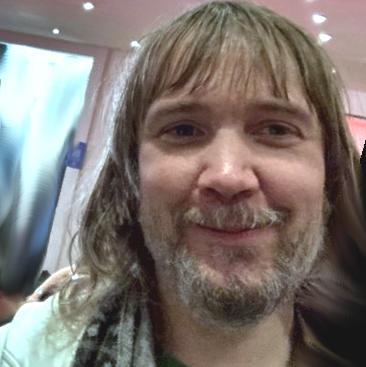
Hans Ryding
Funding and Comms team member

Aimee Fenech
Project coordinator

Paul Phillips
Funding strategist

Kate Swatridge
Impact and Evaluation specialist
 English
  French
  German
  Spanish