
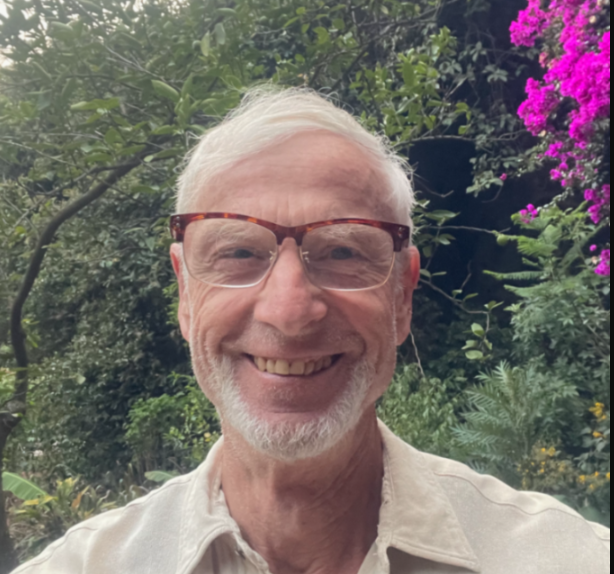
Mapping Permaculture Convergences – Andrew Langford
Andrew (Andy) Langford was born in 1949 in Totnes, England. He entered the cornucopic world of permaculture in 1986 after a mixed career as a junior factory manager, an artesan shoemaker, a shepherding smallholder and bunch of other rich working experiences. His modest contribution to a small part of the permaculture phenomena was to become the first British permaculture teacher and the organiser of the infant Permaculture Association of Britain, initially with the help of Jolyon Fillingham and later with George Soble and Patsy Garrard.
Following his leadership stint with the PCA of Britain, starting around 1993 Andrew led a team of British permaculture people following Bill Mollison’s instructions to develop Permaculture Academy’s around the world resulting in the early versions of the action learning based Diploma of Applied Permaculture Design (DAPD), a design in its own rite that has influenced Diploma designs in several European countries and the USA.
In May 2004 the DAPD caught the attention of Liora Adler of the famed Caravana Arcoris de La Paz during a Global Ecovillage conference in Scotland who proposed using the design as the basis of a university. Andrew agreed and together, Liora and he formed Gaia U International. After a thrilling 20 year run and the untimely death of Liora in May 2024 Gaia U has recently passed into the capable hands of the talented Jennifer Morgan in Tennessee, USA who had been with us from the beginning.
Andrew has necessarily became a fluent, self-initiating transitioneer and action-learner in a generally successful attempt to ride the cultural chaos arising from the destructive decades of neoliberal capitalism and is now roaming the West Coast of the USA and Mexico seeking to weave webs of actionists working to rehydrate these fire and flood prone dryland zones.
CoLab Podcast with Andrew Langford © 2026 is licensed under Creative Commons Attribution-ShareAlike 4.0 International
The creation of this podcast episode was made possible through funding received from the Emergent Festival.
Listen to the podcast:
 English
 French
 German
 Spanish