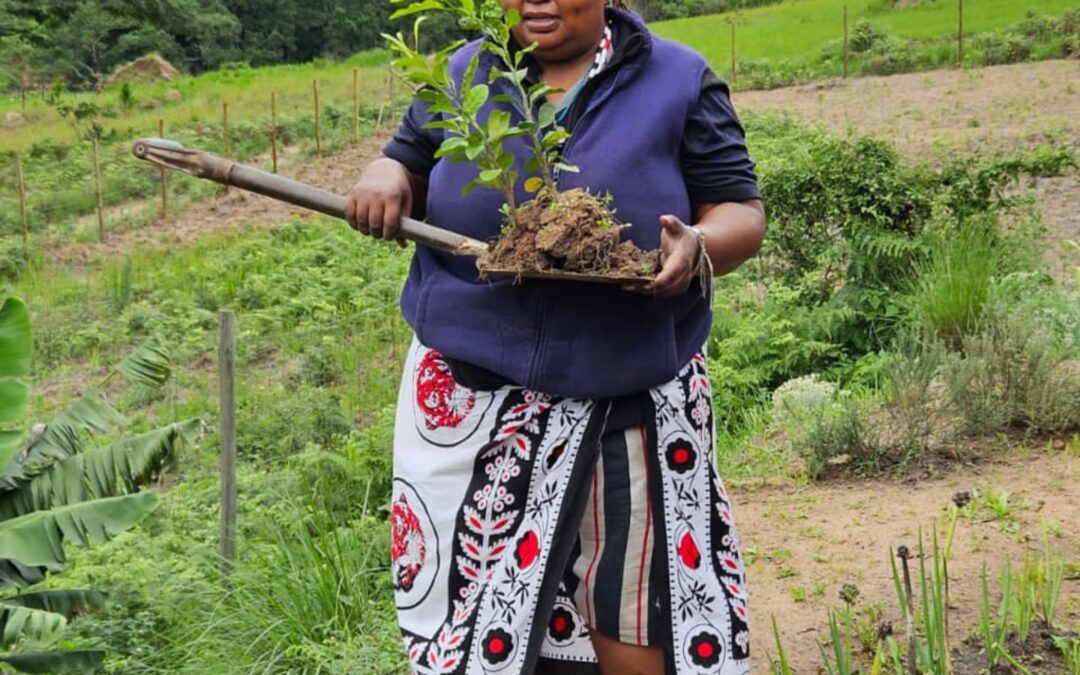
The SheGenerators Perma Hub is based in Rongo, Kenya. The name is derived from the word regeneration but it is also a piece of land welcoming women to learn about regenerative agriculture. It is also a place to nurture talent from young people by encouraging the youth to play music, create art, and a place for the community to congregate. First and foremost it is a place to learn permaculture principles and techniques by teaching women how to grow their own food.
This project will conduct research into what challenges traditional indigenous healers encounter when accessing land for growing food and traditional medicines, particularly from those working from a permaculture perspective and way of life. The project hopes to highlight the barriers that exist when trying to access land, for example to negotiate land owned by a village, economic problems, low income issues, gender inequalities and colonisation.
The next stage is to investigate opportunities to access land, and also the processes, costs, and relevant laws, learning from successful low-capital permaculturists and land gatekeepers. They then hope to publish a guide on creative land access for permaculture, disseminate it to grassroots groups in permaculture. It will talk about traditional healing, agroecology, and food sovereignty, initially in English and then one in their indigenous language.
They will develop a framework from their research to address land access and use in South Africa, offering insights for the rest of Africa, the Global South, and landless permaculturists globally. This framework and their findings will be shared with the CoLab to inspire and enable similar regional initiatives.
Mafah Cornelius Kuta – Wandusoa Organic Cameroon Development Association
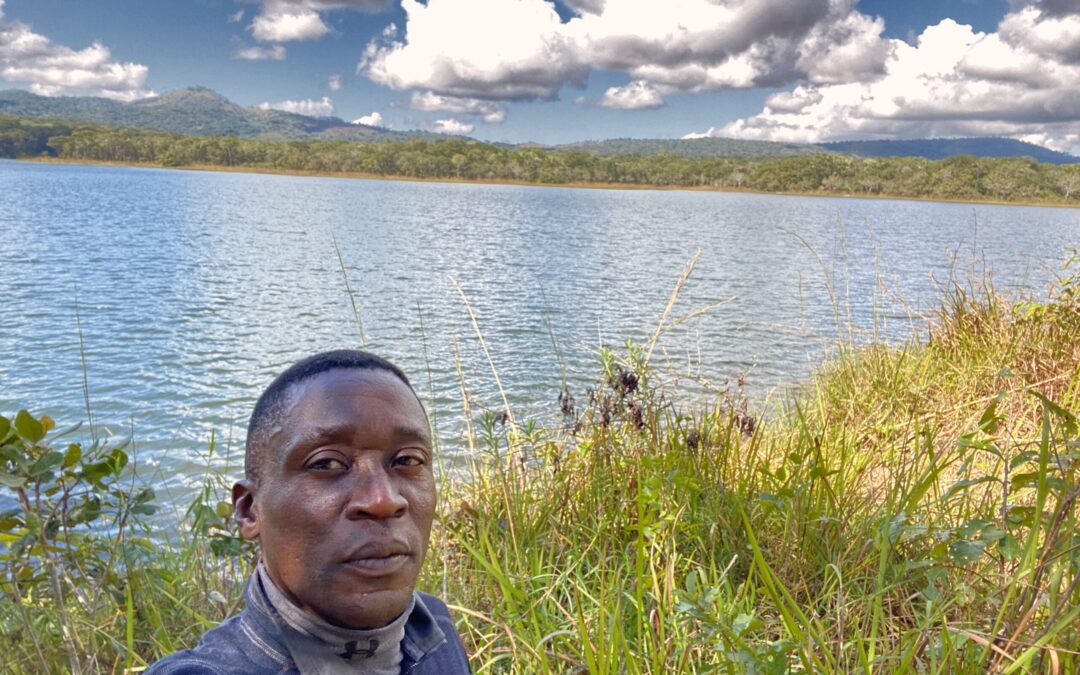
Wandusoa Organic Cameroon is running a regenerative agriculture school with on-campus small-scale enterprises that serve a dual purpose. On the one hand, these enterprises produce and sell organic farm products and services in the local markets, generating income to pay for the school’s expenses and ensuring the school’s long-term financial sustainability.
On the other hand, they offer marginalized youths diverse opportunities to learn regenerative agriculture and business skills in a hands-on way. The school’s program is a business plan embedded in the curriculum that allows students to study traditional subjects like Mathematics and English language, alongside practical regenerative agricultural subjects like agroforestry, permaculture, beekeeping, and livestock rearing.
Their “learning-by-doing and earning” approach to education means that students graduate with the regenerative agriculture/business skills and experience they need to succeed in responsible jobs in the formal regenerative agricultural sector or as self-employed entrepreneurs.
Beehive School Club focusing on climate change and environmental sustainability in Malawi.
The Beehive school runs an after school project to help raise awareness among the pupils to learn about food waste, climate change and sustainability. The club originated after being aware of the amount of plastic waste on the school grounds, and this led to asking questions about single use plastics, the plastic waste on the streets and how they could make use of these plastics. The Environmental Bees Club meets once a week and is divided between a theory session and a practical session.
The Environmental Bees Club is also collaborating with a school in Tanzania, where they hope to spent some time there on retreat to learn about permaculture practices, environmental sustainability practices and how to address climate change.
Runach Arainn is a sustainable eco glamping business based around a food forest garden with permaculture practices at its heart. The business was designed around nature, with sustainable practice at its heart. From day one they incorporated ‘green’ practices into both how the business itself works and in all areas on site for guests.
By investing in this way, they try to:
lessen their environmental impact
demonstrate sustainable practice
enhance the environment around them
create a beautiful, relaxing natural site and
offer amazing sustainable holidays without compromising quality or luxury.
From their butterfly filled meadow and rare Arran whitebeam trees, to the abundant food forest garden and red squirrels around site, they hope you would enjoy staying and engaging with your surroundings. Lots of information is provided on what they do and tours that are available.
Malawi Schools Permaculture Clubs (MSPC) is a programme that supports primary school teachers in Malawi who want to run an after-school permaculture club at their school.
Permaculture clubs are held weekly during term time and utilise fun and practical activities. Children learn how to care for and regenerate their local environment, new ways to use and value local resources, practical methods to improve and maintain the health of soil, and how to manage and store water. They also learn how to produce their own diverse and nutritious food and other useful crops without the need for expensive chemical inputs.
To provide the best experiences, we use technologies like cookies to store and/or access device information. Consenting to these technologies will allow us to process data such as browsing behaviour or unique IDs on this site. Not consenting or withdrawing consent, may adversely affect certain features and functions.
Functional
Always active
The technical storage or access is strictly necessary for the legitimate purpose of enabling the use of a specific service explicitly requested by the subscriber or user, or for the sole purpose of carrying out the transmission of a communication over an electronic communications network.
Preferences
The technical storage or access is necessary for the legitimate purpose of storing preferences that are not requested by the subscriber or user.
Statistics
The technical storage or access that is used exclusively for statistical purposes.The technical storage or access that is used exclusively for anonymous statistical purposes. Without a subpoena, voluntary compliance on the part of your Internet Service Provider, or additional records from a third party, information stored or retrieved for this purpose alone cannot usually be used to identify you.
Marketing
The technical storage or access is required to create user profiles to send advertising, or to track the user on a website or across several websites for similar marketing purposes.




 English
  French
  German
  Spanish